 GoShipFast
GEO
GEO vs SEO in 2026: How to Get Cited When AI Answers First
For twenty years the job was to be the first blue link. Now a machine reads your page, writes the answer, and the user may never click. GEO is the discipline of getting cited inside that answer. Here is how it differs from the SEO you already know, and what actually changes in your work this year.
For twenty years the job was simple to describe. You wanted to be the first blue link. Someone typed a query, the search engine returned ten results, and the click went to whoever sat at the top. Rankings were the whole game, and the entire SEO industry grew up around moving a page from position eight to position one.
That game still runs. A second one now runs beside it.
Ask ChatGPT how to fix a slow website. Ask Perplexity which analytics tool fits a small SaaS. Run almost any informational query on Google and watch the AI Overview compose an answer above the ten blue links. In each case a model reads dozens of pages, synthesizes a response, and hands it back with a handful of sources attached. Very often the user reads the answer and never clicks through to any of them.
That shift is the reason a new term keeps showing up in your feed: GEO, or Generative Engine Optimization. This piece lays out what GEO is, how it differs from the SEO you already practice, and what genuinely changes in your day-to-day work in 2026.
The search box split in two
Classic search is a ranking problem. The engine builds an index, scores every page against a query, and returns an ordered list. Your work is to earn a higher slot on that list. The click, and the visit, and the conversion all follow from the slot.
Generative search is a synthesis problem. An answer engine takes the query, retrieves a set of candidate documents, and writes a single response in natural language. Google AI Overviews does this on top of classic ranking. ChatGPT search, which OpenAI opened up in late 2024, does it as a standalone product. Perplexity built an entire company around it. The output reads as a paragraph, with two or three cited links tucked underneath, and the reader takes the answer whole.
The scale of this is not a rounding error. Back in early 2024, Gartner predicted that traditional search engine volume would fall 25 percent by 2026 as users shift queries to AI assistants.[1] Whether the exact figure lands or not, the direction is settled. A large and growing share of the questions your content used to answer through a click now get answered inside a generated response, before any click happens.
So there are two boxes now. The old one ranks pages. The new one writes answers. Both decide whether your work gets seen, and they decide it in different ways.
What GEO actually means
Generative Engine Optimization is the practice of shaping your content so that answer engines include it, quote it, and cite it when they compose a response.
The term is not marketing coinage. It comes from a 2023 research paper, "GEO: Generative Engine Optimization," from a team at Princeton, the Allen Institute for AI, Georgia Tech, and IIT Delhi, later presented at KDD 2024.[2] The authors built a benchmark of 10,000 queries and tested which content changes moved a source up in a generated answer. Their finding was concrete: tactics like adding relevant statistics, quotations, and credible citations lifted a source's visibility in generative responses by as much as 40 percent, and these levers often mattered more than raw keyword stuffing.
Read that carefully, because it reframes the target. In classic SEO the unit of success is a page that ranks. In GEO the unit of success is a passage that gets pulled into an answer and attributed to you. You are optimizing for extraction and attribution, so a model reading your page finds a clean, quotable, well-supported statement and decides it is worth repeating with your name on it.
Why the top rank stopped being the finish line
Consider what happens when the answer engine does its job well. A user asks how to reduce cumulative layout shift on a Next.js site. The model reads five articles, writes a tidy four-step answer, and cites two of them. The user fixes the problem and closes the tab. Nobody clicked the other three sources, and even the two cited sources may get no visit at all.
You can rank first for that query and still lose the outcome. The ranking fed the model its raw material, yet the reward went to whoever got quoted, and position one earned nothing. This is the zero-click reality taken to its conclusion. Featured snippets started eroding clicks years ago. Generative answers finish the job for a whole class of informational queries.
The practical consequence is a shift in what you measure. Impressions and average position still tell you something, since the model retrieves from the same index you have always fought to enter. On top of that you now care about a second question entirely: when an AI answers a query in your space, does it mention you, and does it link you as a source? That is a different scoreboard, and most teams have no instrument pointed at it yet.
What generative engines reward
The signals that get you cited overlap with good writing more than they overlap with old SEO tricks. Drawing on the GEO research and on what the current answer engines visibly favor, a few patterns stand out.
- Extractable answers. Lead with the direct answer, then explain. A model scanning for a quotable sentence should find one near the top of the relevant section, phrased so it stands on its own without the surrounding paragraph.
- Evidence a model can trust. Specific numbers, dated figures, named sources, and direct quotations all raise the odds of being cited. A claim with a statistic and a source attached is more repeatable than an unsupported assertion, and the research bears this out.
- Clean structure. Descriptive headings, short self-contained sections, and lists give a retrieval system obvious handles. Content that is one undifferentiated wall of text is harder to slice into an answer.
- Entity clarity. Say plainly what a thing is, who makes it, and what it does. Models assemble answers around entities and their attributes, so ambiguity about your product or brand costs you inclusion.
- Authority and freshness. Credible sourcing and a recent, maintained page both push a source up in generated answers. Stale content with no citations is easy for a model to skip.
- Machine-readable signals. Structured data helps, and a growing number of sites now publish an
llms.txtfile, a proposal from Jeremy Howard in 2024 that offers language models a curated map of a site's most useful pages in plain markdown.[3]
None of this is exotic. It is what a careful editor would ask for anyway. The change is that a machine is now the first reader, and it rewards clarity and evidence with something concrete: a place in the answer.
Where SEO and GEO overlap, and where they part
Start with the shared foundation, because it is large. Both disciplines need a site that crawls cleanly, loads fast, and renders its content without a fight. Both need genuine topical authority and real backlinks, since the models retrieve from the same web the search index already scores. Both reward well-organized, trustworthy, genuinely useful pages. If your technical SEO is broken, your GEO is broken too, for the simple reason that a page a crawler cannot read is a page a model cannot retrieve.
The two part ways at the finish. SEO tunes a page to win a slot on a list, so its instincts run toward keyword coverage, title tags, internal link equity, and click-through rate on a blue link. GEO tunes a passage to be lifted into an answer, so its instincts run toward quotable phrasing, cited evidence, and self-contained sections. A page can rank well and still be almost impossible to quote, because everything useful in it is tangled up in context. A different page can be eminently quotable and still rank poorly, because its authority is thin. The strongest content in 2026 satisfies both readers at once: the ranking algorithm and the summarizing model.
There is no need to choose between them. GEO sits on the SEO foundation and adds a layer. You still do the technical and authority work that gets you into the index. Then you shape the content on top so that the model reading that index finds you worth repeating.
Where GoShipFast fits
GoShipFast was built for the operator who has to satisfy both readers without assembling a toolchain to do it. A few pieces of that map directly onto the two disciplines above, and it is worth being precise about what the platform does and does not do.
On the shared foundation, the built-in technical engine handles the table stakes that GEO and SEO both depend on: automated audits, performance checks, structured data validation, and index status tracking, run on every deploy and reported in one dashboard. A page that clears those checks is a page both a search crawler and an answer engine can actually read.
On the content side, generation is built to produce the shape that gets quoted. Search intent analysis, clear sectioning, and evidence-forward drafting are part of the flow, so what comes out is structured for extraction rather than dumped as a wall of prose that a human then has to reorganize for a machine.
Now the honest limits. No platform can dictate what a model ultimately writes, and anyone who promises guaranteed citations in ChatGPT or AI Overviews is selling something they do not control. What software can do is stack the odds: keep the site technically retrievable, produce content in a quotable form, and monitor whether the answer engines are actually surfacing you so you can respond to real behavior instead of guessing. That monitoring layer, watching whether your brand shows up when an AI answers questions in your space, is the instrument most teams are still missing, and it is the part worth investing in early.
The 2026 playbook
If you take one thing from this, let it be that these are two games played on one field, and you run both.
Keep doing the SEO fundamentals. Crawlability, speed, structured data, topical authority, and real backlinks are the price of entry, and they feed the generative layer as much as the classic one. Neglect them and you are invisible to both.
Then add the GEO layer on top. Lead sections with a direct, self-contained answer. Back your claims with dated statistics and named sources. Structure content into clean, quotable sections with descriptive headings. State plainly what your product and brand are. Keep your important pages fresh, and give the models a machine-readable map to them. Finally, start measuring the new scoreboard: track whether AI answers in your category mention and cite you, and treat that as a first-class metric alongside rank and traffic.
Classic search decides which pages the models are allowed to read. Generative search decides which of those pages the models choose to repeat. In 2026 you want to win on both counts, so you get into the index and then get quoted from it.
References
- Gartner. "Gartner Predicts Search Engine Volume Will Drop 25% by 2026, Due to AI Chatbots and Other Virtual Agents." gartner.com, February 19, 2024. https://www.gartner.com/en/newsroom/press-releases/2024-02-19-gartner-predicts-search-engine-volume-will-drop-25-percent-by-2026-due-to-ai-chatbots-and-other-virtual-agents
- Aggarwal, Pranjal, Vishvak Murahari, Tanmay Rajpurohit, Ashwin Kalyan, Karthik Narasimhan, and Ameet Deshpande. "GEO: Generative Engine Optimization." arXiv preprint arXiv:2311.09735, 2023. Presented at KDD 2024. https://arxiv.org/abs/2311.09735
- Howard, Jeremy. "The /llms.txt file." llmstxt.org, 2024. https://llmstxt.org/
Keep reading
SEO Fragmentation vs GoShipFast: The 2026 Verdict
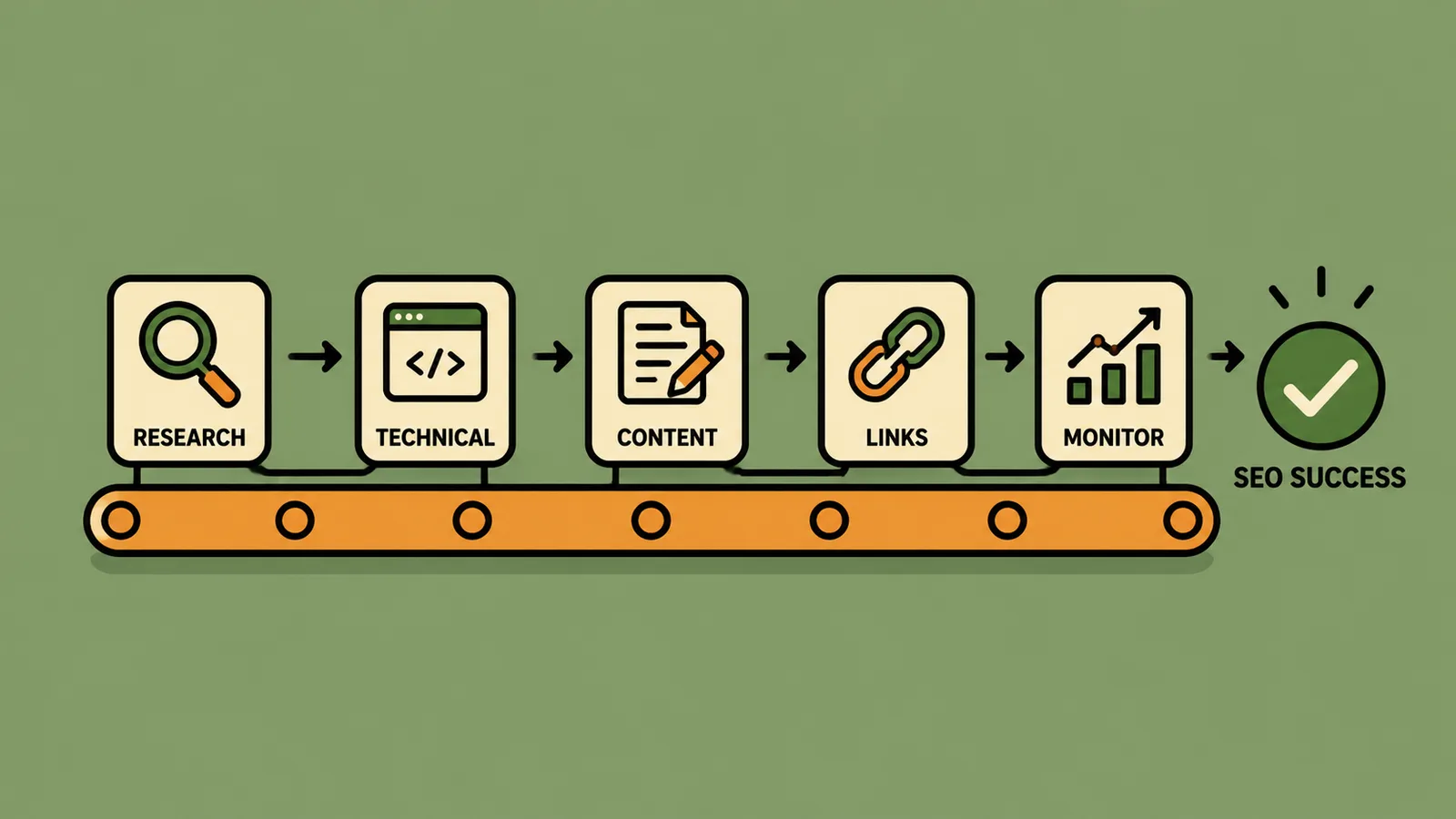
The average SEO practitioner used 6.2 tools in 2025. Keyword research, technical audits, content optimization, and backlink analysis each demand their own subscription. That is $309 a month before you even count the switching cost. GoShipFast replaces the toolchain with a single pipeline. Time to do the math again.

What I Was Thinking When I Started GoShipFast
My other product has been a grind for almost ten months. GoShipFast sold out on day zero. Here is what changed in between.