 GoShipFast
SEO
SEO Fragmentation vs GoShipFast: The 2026 Verdict
The average SEO practitioner used 6.2 tools in 2025. Keyword research, technical audits, content optimization, and backlink analysis each demand their own subscription. That is $309 a month before you even count the switching cost. GoShipFast replaces the toolchain with a single pipeline. Time to do the math again.
More tools than ever, more fragmented than ever
Open the browser of any experienced SEO practitioner and you will probably see a row of pinned tabs: a keyword tool, a crawler, a content optimizer, a backlink checker, plus Google Search Console and two or three Chrome extensions. That is not hyperbole. A 2025 SparkToro survey found that the average SEO practitioner was juggling 6.2 tools just to get through their day. By 2026, that number has only gone up.
Every niche has its champion. Ahrefs is untouchable on keyword research and backlink analysis. Screaming Frog is the Swiss Army knife of technical audits. Surfer SEO turned content optimization into a science. On paper, this looks like a thriving ecosystem: you pick the best from each category, assemble your dream team, and off you go.
But anyone who has actually done this knows the dream team does not run fast. Opening seven tabs every morning, logging into five dashboards, exporting data from one platform and importing it into another, it feels less like a workflow and more like a second job. The flip side of abundance is fragmentation, and the bill for that fragmentation is getting harder to ignore.
The hidden bill: four subscriptions for four functions
Let us run the numbers. What does it actually cost a solo developer or a small team to cover the four pillars of SEO every month?
Keyword research comes first. Ahrefs starts at $129 a month on the Lite plan, but most people quickly outgrow Lite and end up on Standard at $249.[^1] Semrush Pro runs $139.95 a month.[^2] If you want an AI-powered option like Keyword Insights, add another $58 a month.[^3] A conservative midpoint puts keyword research at $150 a month.
Technical audits are non-negotiable. Screaming Frog lets you crawl 500 URLs for free, but anything beyond a hobby site needs the paid version, which is $259 a year, roughly $22 a month.[^4] Sitebulb starts at $35 a month.[^5] Enterprise-grade Lumar (formerly DeepCrawl) begins at $300 a month.[^6] For a mid-sized site, budget at least $35 a month for technical auditing.
Content optimization tools have been the fastest-rising category in recent years. Surfer SEO's Essential plan is $89 a month,[^7] Clearscope Essentials is $129 a month,[^8] and Frase starts at $45 a month.[^9] Take the middle tier, and you are at $89 a month.
For backlink analysis, if you can skip the enterprise features, Majestic runs $49.99 a month,[^10] and Monitor Backlinks comes in at $20.75 a month.[^11] Call it $35 a month.
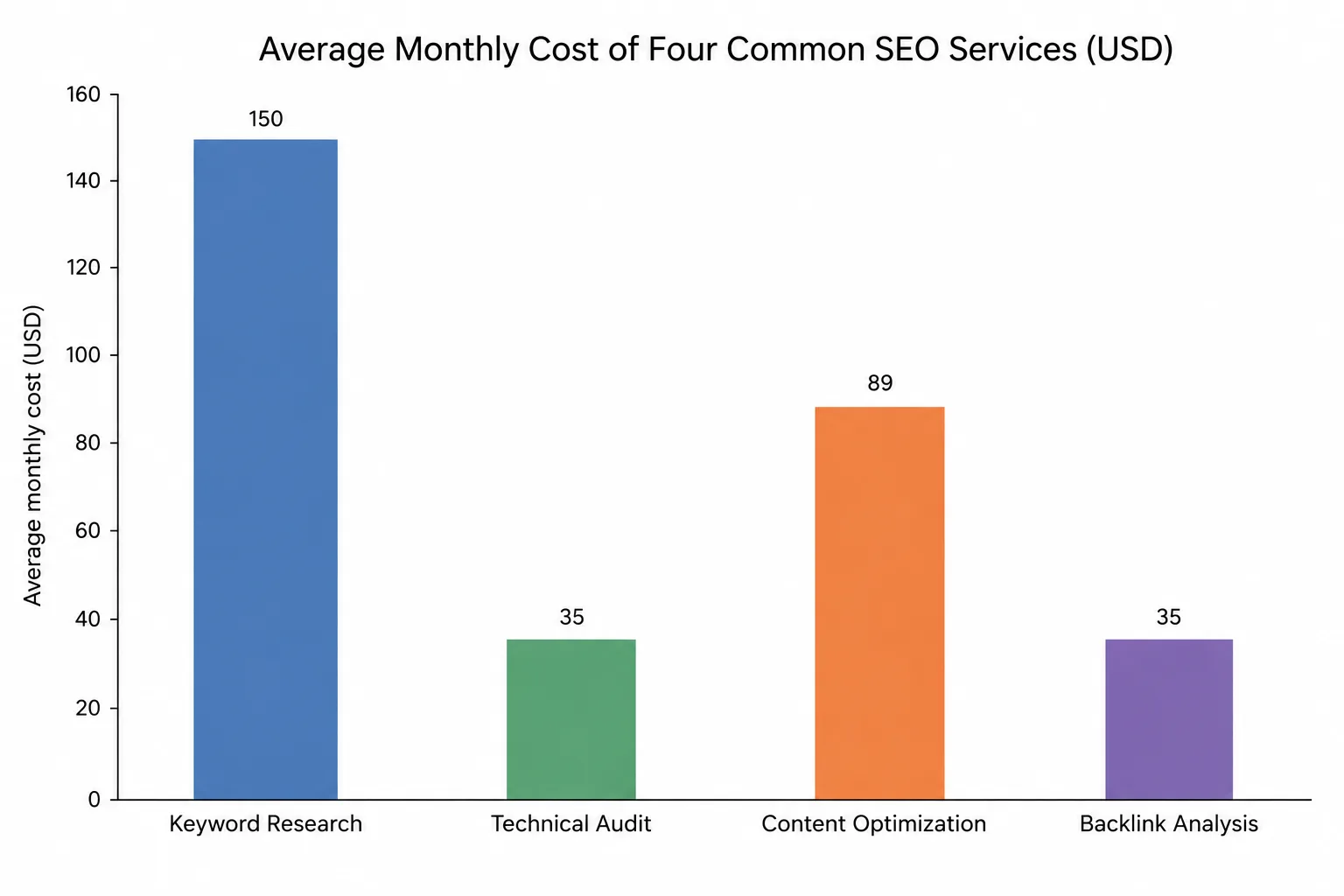
Add those four up and you are at $309 a month, or $3,708 a year. That does not include the auxiliary tools yet. Google Search Console is free, but you probably still want Looker Studio for reporting (free but takes time to set up), a couple of Chrome extensions for on-page analysis, and a rank tracker to watch your positions. Toss those in and you cross $4,000 a year without breaking a sweat.
And that is the entry-level pricing. If you run an agency, or your site spans tens of thousands of pages, the Enterprise plans for these same tools will double or triple that number.
Switching costs: the real drain is the data shuffle
Money is not even the biggest problem. The cost everyone overlooks is time, specifically the switching cost of shuttling data between tools.
Picture a typical SEO afternoon. You run a keyword research session in Ahrefs and export a CSV with 200 candidate keywords. Next, you need to feed those 200 terms into Surfer SEO for content optimization analysis. But the two tools do not share a data format, so you spend some time massaging the columns. Once the analysis is done, you want to check whether the target pages have any technical issues, so you fire up Screaming Frog, recrawl the site, and manually log the findings into a Notion doc or a Google Sheet.
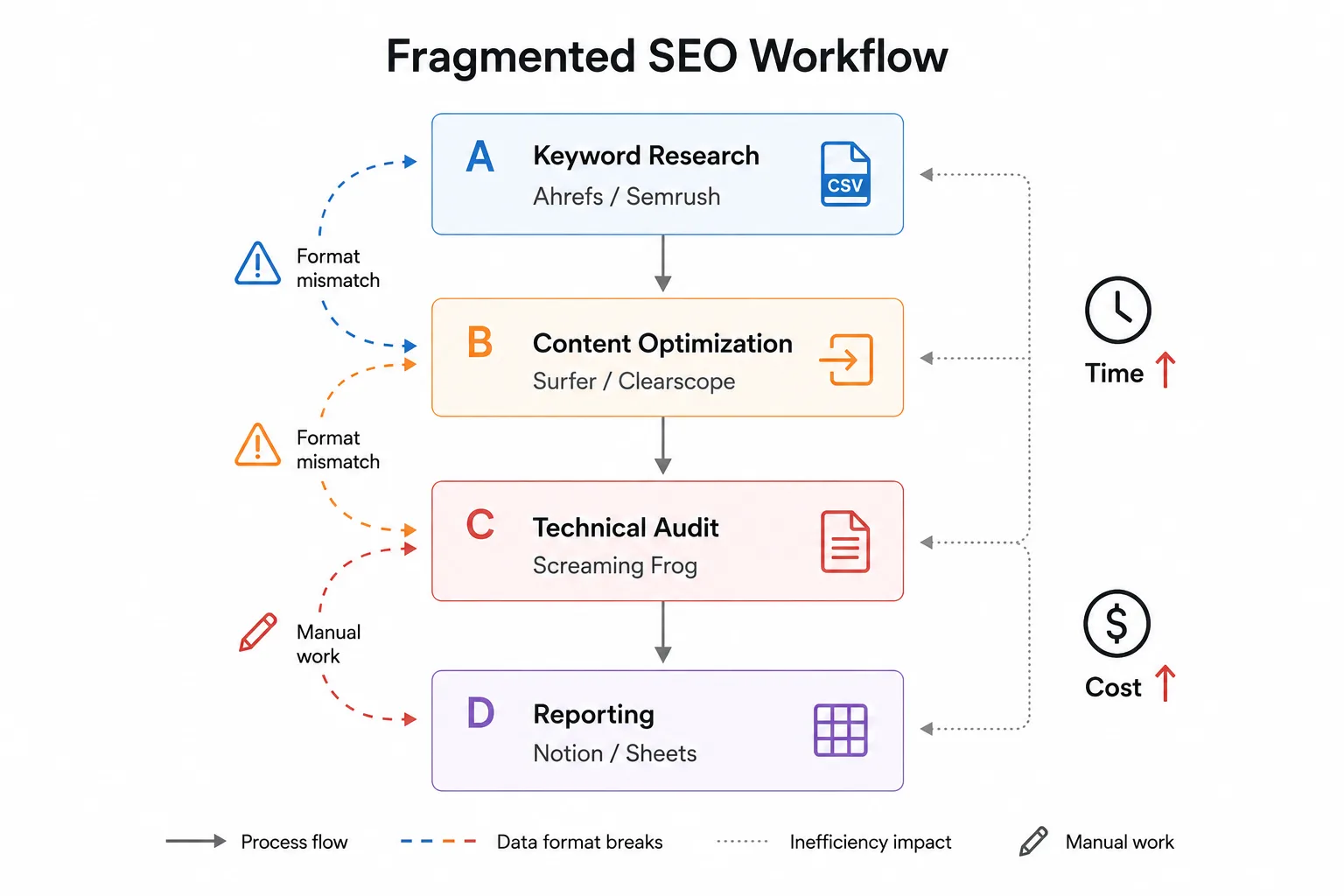
On an afternoon like this, maybe 40% of your time is actual analysis. The other 60% is data logistics. Every time you jump from one tool to another, you do not just lose time, you lose context. By the time you finish reading an audit report and switch back to your content tool, you have already forgotten which specific issue you meant to fix on that page.
For a small team, this adds up to at least one full day a week spent on what amounts to data courier work. Do the math at an hourly rate. If an SEO practitioner charges $75 an hour,[^12] one wasted day a week is $600, or $2,400 a month. Stack that on top of the tool subscriptions, and your real monthly SEO operating cost is close to $2,700.
Data silos: the tools do not talk, so you guess
Even deeper than switching costs is a more fundamental pain: the data from different tools never lives on the same page.
Your keyword tool says this long-tail term is trending up. Your content optimization tool recommends a 2,000-word article to capture it. But your technical audit tool reports that this subdirectory has terrible indexability, and any page published there might take forever to get picked up. Three signals, three platforms. Nowhere do you see the full picture: search volume trend, content strategy, technical readiness, all in one place.
So decision-making becomes a series of compromises. You build a content plan from keyword data, but because you never saw the audit results, you spend two weeks optimizing a directory with an indexing problem. Or the reverse: you fix the technical issue, but because your content tool's recommendations are detached from real-time search data, you end up writing an article targeting a trend from six months ago.
The output of a fragmented toolchain is not the optimal answer. It is the best compromise you can reach between data sources that were never designed to work together.
This is not a criticism of the tools themselves. Each one is excellent at what it does. The problem is that they do not talk to each other, and you are stuck in the middle doing manual integration.
GoShipFast's answer: one pipeline instead of a toolchain
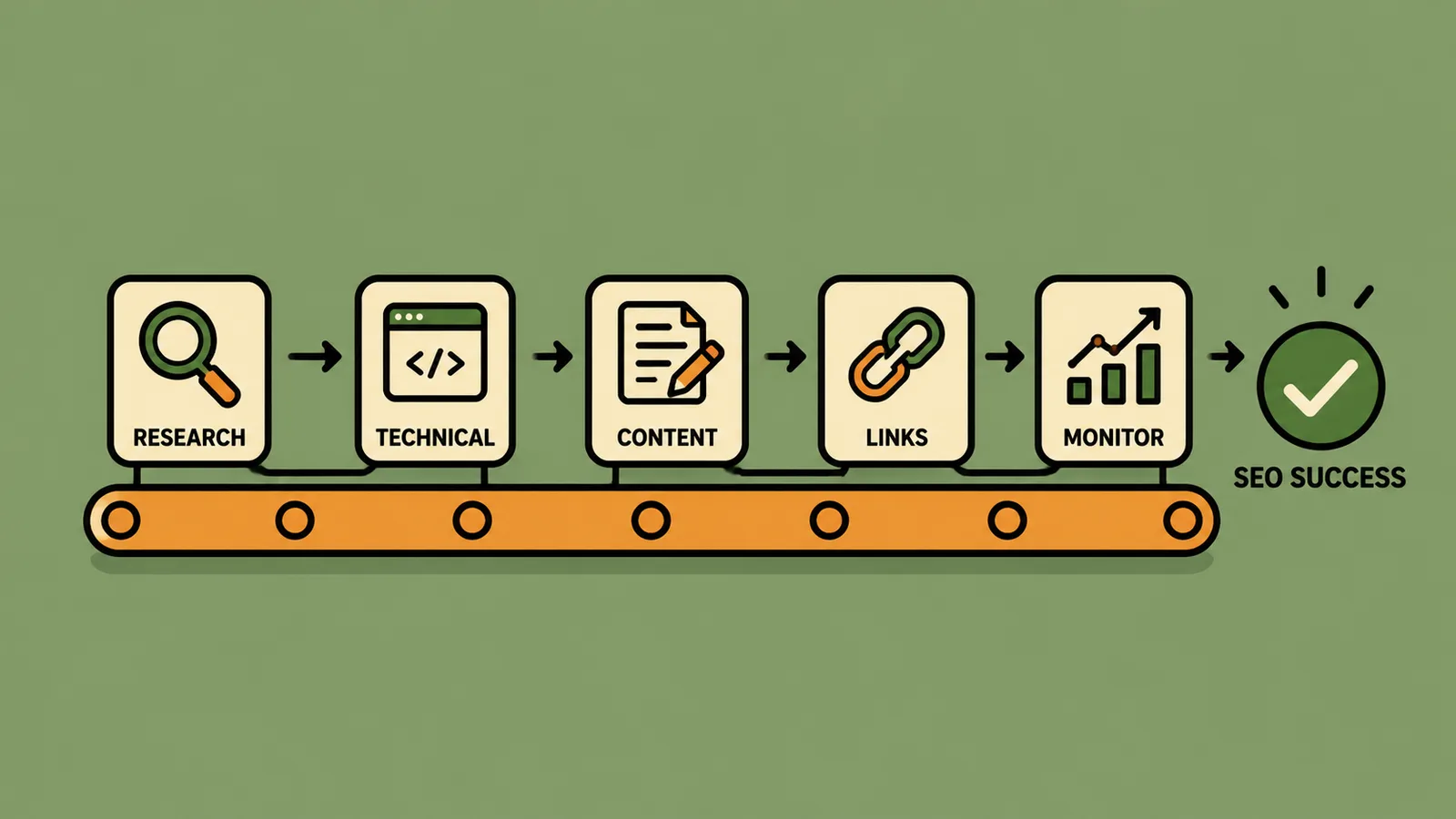
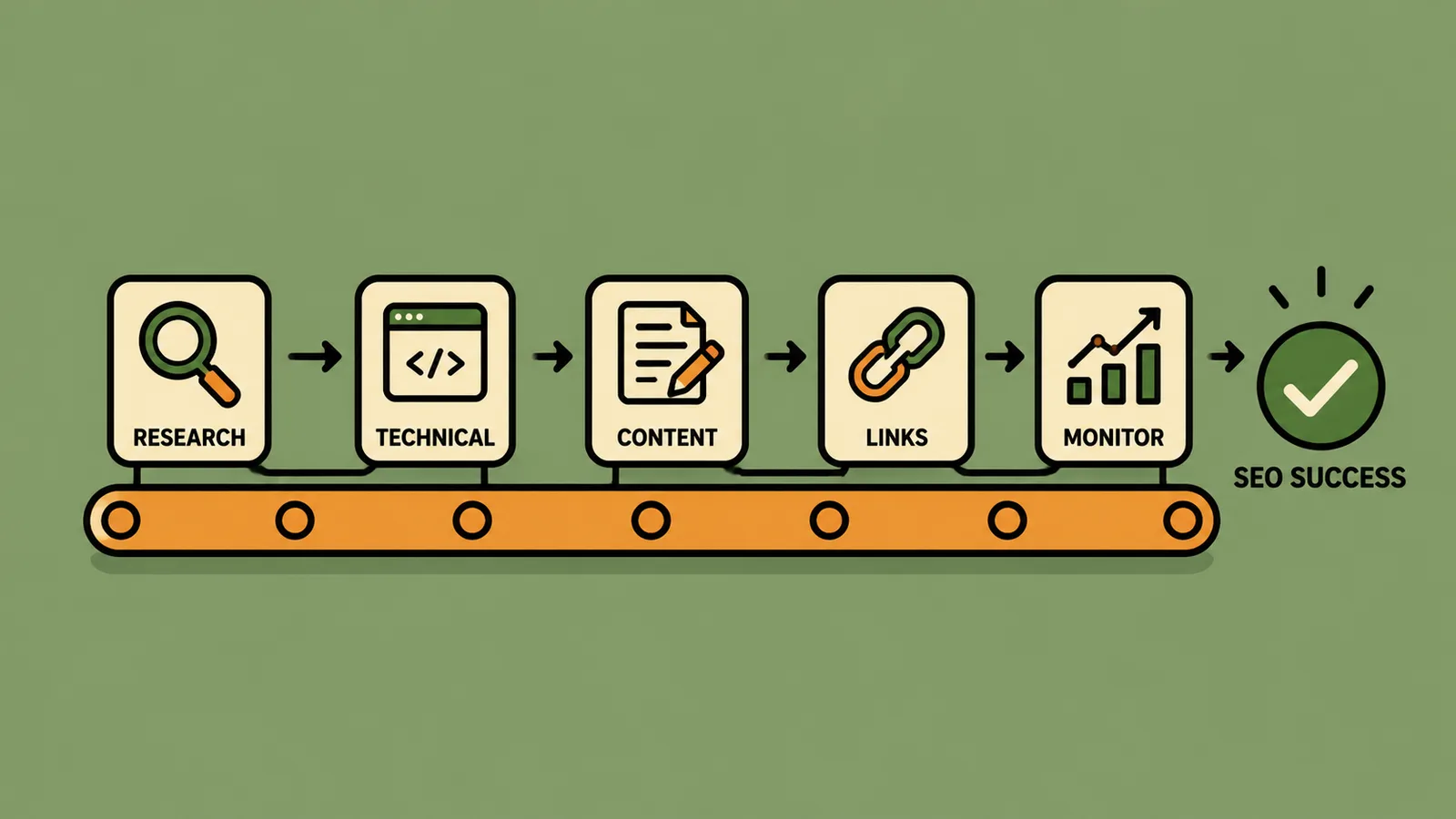
GoShipFast tackles this head-on by building the essential SEO functions into a single pipeline instead of making you assemble one from parts.
The built-in technical SEO engine covers automated audits, performance monitoring, structured data validation, and index status tracking. You do not need to open Screaming Frog to crawl your site. These checks happen automatically on every deployment, and the results live in the same dashboard.
The content generation module carries SEO optimization natively. When you create a new piece of content through GoShipFast, it does not hand you a draft and send you off to Surfer for tuning. Instead, search intent analysis, keyword density structure, readability optimization, and internal linking suggestions are all baked into the generation flow. In the same interface, you get content plus optimization, not content and then a separate optimization pass.
Across the four core categories, here is where GoShipFast currently stands: technical SEO is a full replacement, content optimization is deeply integrated, keyword research provides goal-oriented analysis rather than a firehose of database queries, and backlink analysis, to be upfront, does not yet offer a complete backlink index. We are transparent about that one.
The critical difference is that all these modules share the same underlying dataset. Technical audit findings flow directly into content priority ranking. Keyword performance feeds real-time adjustments to content strategy recommendations. You are not moving data between four tools. You are watching data move on its own inside one platform.
An honest comparison: what GoShipFast does and does not do
No product should pretend to do everything, so let us lay out an honest side-by-side.
What GoShipFast can fully replace: technical SEO audits, page performance analysis, structured data validation, content optimization recommendations, internal link management, and SEO health monitoring. For solo developers and small to mid-sized teams running their own sites, these are the parts of daily SEO that eat the most time, and the parts that benefit most from unification.
What GoShipFast needs a companion for: enterprise-grade backlink databases and large-scale keyword indexes. If you need to map a competitor's full backlink graph, or do deep keyword mining across a corpus of millions of terms, you will still want an Ahrefs or Semrush subscription. GoShipFast is not aiming to replace search-engine-level index infrastructure. It is aiming to make sure you do not have to run between those infrastructures all day.
So the realistic fit looks like this: if you are a solo developer or a small SaaS team whose core SEO need is keeping your site technically healthy, your content quality high, and your structure sound, GoShipFast can directly replace three to four of your current tool subscriptions, plus eliminate the time you spend switching and shuttling data around. If your work involves weekly backlink analysis across hundreds of domains, or keyword research that needs to cover millions of terms, you should use GoShipFast as your main platform plus one backlink tool, not go all-in on just one.
The 2026 verdict: the all-in-one is eating the toolchain
Now let us come back to the cost question. Swap a single GoShipFast subscription in for your keyword tool, technical audit tool, and content optimization tool (keep one backlink tool as a supplement), and your monthly tool spend drops from $309 to roughly $110. Over a year, that is about $2,400 in hard savings on subscriptions. Now add back the switching time we calculated earlier, roughly 15 hours of data-courier work saved per month. At $75 an hour,[^12] that is another $13,500 a year in efficiency gains.
Now let us come back to speed. A traditional full-cycle SEO workflow (keyword research, technical audit, content planning, optimization execution, performance tracking) spread across four or five tools typically takes three to five days per cycle. Run those same steps on a single pipeline inside a single platform, and the same cycle compresses into an afternoon. Not because any individual step got faster, but because you no longer have to stop to export, import, reconcile, and fill in gaps along the way.
Now let us come back to quality. Data that never leaves the platform means technical issues and content strategy stay aligned. It means content priorities are driven by live site health data instead of stale exports. It means your optimization judgment on any given page is informed by multi-dimensional, cross-referenced signals rather than a single tool's narrow view. This is not a better tool. This is a better decision-making environment.
The SEO tool market in 2026 is going through a clear inflection point. The golden age of point solutions is over, not because the tools got worse, but because the cost of stitching them together got too high. All-in-one platforms are not competing against individual tools. They are competing against assembled toolchains. The all-in-one might not score 100 out of 100 on every single function, but on the dimension of workflow, it scores something no tool combination can match.
That is the 2026 verdict. It is not that GoShipFast is better than any specific tool. It is that a complete pipeline is more valuable than a toolbox full of standalone parts.
References
- Ahrefs. "Pricing." ahrefs.com. Accessed June 30, 2026. https://ahrefs.com/pricing
- Semrush. "Plans & Pricing." semrush.com. Accessed June 30, 2026. https://www.semrush.com/prices/
- Keyword Insights. "Pricing." keywordinsights.ai. Accessed June 30, 2026. https://www.keywordinsights.ai/pricing/
- Screaming Frog. "SEO Spider Pricing." screamingfrog.co.uk. Accessed June 30, 2026. https://www.screamingfrog.co.uk/seo-spider/pricing/
- Sitebulb. "Pricing." sitebulb.com. Accessed June 30, 2026. https://sitebulb.com/pricing/
- Lumar. "Pricing." lumar.io. Accessed June 30, 2026. https://www.lumar.io/pricing/
- Surfer SEO. "Pricing." surferseo.com. Accessed June 30, 2026. https://surferseo.com/pricing/
- Clearscope. "Pricing." clearscope.io. Accessed June 30, 2026. https://www.clearscope.io/pricing
- Frase. "Pricing." frase.io. Accessed June 30, 2026. https://www.frase.io/pricing/
- Majestic. "Plans & Pricing." majestic.com. Accessed June 30, 2026. https://majestic.com/plans-pricing
- Monitor Backlinks. "Pricing." monitorbacklinks.com. Accessed June 30, 2026. https://monitorbacklinks.com/pricing
- Search Engine Journal. "SEO Pricing: How Much Should You Charge?" searchenginejournal.com. Accessed June 30, 2026. https://www.searchenginejournal.com/seo-hourly-rates/
Keep reading
GEO vs SEO in 2026: How to Get Cited When AI Answers First
For twenty years the job was to be the first blue link. Now a machine reads your page, writes the answer, and the user may never click. GEO is the discipline of getting cited inside that answer. Here is how it differs from the SEO you already know, and what actually changes in your work this year.

What I Was Thinking When I Started GoShipFast
My other product has been a grind for almost ten months. GoShipFast sold out on day zero. Here is what changed in between.